A probate property is a home that forms part of someone's estate and must go through the probate process before ownership can be transferred or sold. During probate the executor is responsible for identifying assets, paying debts, managing the property and distributing what remains to the beneficiaries.
That matters to executors and beneficiaries who have to decide what to do with an inherited home. Most are doing it for the first time, often while the estate is still being pieced together.
When someone dies leaving property as part of their estate, that property usually enters the probate process. During probate the executor manages the deceased person’s assets and makes sure they reach the right people: as the will says, or under the intestacy rules if there is no will.
A probate property is a home that forms part of the estate and must go through that legal process before ownership can be transferred or sold.
Key terms
Which words will you meet first?
Three terms do most of the work in every conversation about an inherited home. The probate glossary defines the rest.
- Grant of probate
The legal document issued by HMCTS confirming the executor has authority to deal with the estate. Nothing can complete without it.
- Executor
The person named in the will to administer the estate. They hold the legal authority to sell the property.
- Beneficiary
Someone entitled to receive assets from the estate. A beneficiary does not automatically have the right to sell.
Definition
What does probate mean?
Probate is the legal process that confirms a will is valid and authorises an executor to administer the deceased person’s estate. During probate the executor is responsible for:
- Identifying the estate’s assets
- Paying outstanding debts
- Managing the property
- Distributing what remains to the beneficiaries
Where the estate includes a property, the executor has to handle it properly before ownership can transfer.
During the process
What happens to a property during probate?
When a property enters probate it becomes part of the estate the executor has to administer. In that period the executor may need to:
- Secure the property
- Arrange insurance
- Maintain the home
- Obtain valuations
- Prepare it for sale, if that is the decision
Every decision about the property has to be in the interest of the estate and its beneficiaries. The executor has to be able to justify it.
Responsibility
Who is responsible for the property?
The executor named in the will. Where there is no will, the court appoints an administrator who takes on the same duties under the intestacy rules.
Responsibilities tied to the property normally include:
- Maintaining the home
- Arranging valuations
- Deciding whether to sell it or retain it
- Making sure the estate receives fair value if it is sold
What an executor is responsible for sets out that role in full.
Selling
Can a probate property be sold?
Yes, once probate has been granted and the executor has legal authority to transfer ownership.
Preparation can start well before that. Executors routinely obtain valuations, clear the property and weigh up selling options while the application is still running. A sale can be marketed and agreed before the grant arrives. It simply cannot complete until then. Selling before probate is granted covers what is and is not possible in that window.
Reasons
Why do executors sometimes sell an inherited home?
There are several reasons an inherited home is sold during estate administration. The common ones are:
- Distributing the estate’s value among beneficiaries
- Ending ongoing maintenance and holding costs
- Resolving a disagreement between beneficiaries
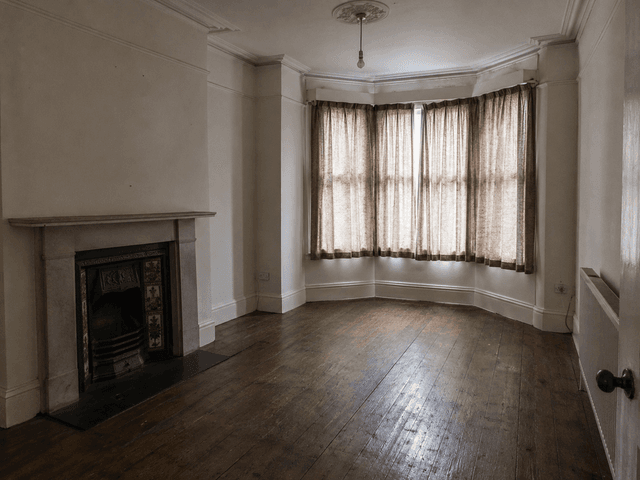
- Dealing with a property that needs significant work
Selling converts an asset that costs money to hold into funds that can actually be distributed.
Difficulties
What makes managing an inherited home difficult?
Managing the property is demanding for an executor who has not done it before. Four things account for most of the difficulty.
- Maintaining a vacant property
An empty house still needs insurance, security, heating and upkeep, and standard cover usually lapses once it has stood unoccupied for a month or two.
- Coordinating with beneficiaries
Everyone entitled to a share has a view on what should happen, and those views rarely arrive at the same time or point the same way.
- Understanding legal requirements
Executors take on duties they have often never had before, and can be personally liable for loss caused by handling estate assets badly.
- Dealing with properties that need repairs
Disrepair narrows the pool of buyers who can get a mortgage, and spending estate money on works carries no guaranteed return.
Options
What options does an executor have for the property?
There is more than one route, and none of them is automatically right. The full comparison of every route sets them against each other on timeline, cost and certainty.
- Sell through an estate agent
The open market. Usually the highest headline price, and the least certain timeline once a chain is involved.
- Sell at auction
A fixed date and a binding exchange on the fall of the hammer, at a price the room decides on the day.
- Sell directly to a property buyer
A single buyer, no chain and no marketing, in exchange for a price below open market value.
- Transfer it to the beneficiaries
Ownership passes rather than the asset being converted to cash. It works where the beneficiaries agree and the estate can settle its debts without the sale.
- Keep it and let it out
The estate holds the property as an investment. That turns a one-off decision into an ongoing responsibility for whoever ends up managing it.
Valuation
What decides what the property is worth?
Executors normally obtain a valuation before deciding anything. Five factors move the figure more than the rest.
- Location
The single largest factor, and the one nobody can change. Two identical houses in different streets are not worth the same money.
- The condition it is in
Structural problems, damp and an outdated interior all move the figure, and some of them move whether a lender will touch it at all.
- Local housing demand
What comparable homes nearby are actually selling for now, rather than what they were listed at.
- What it would cost to renovate
A buyer prices the work they will have to do, so the cost of the works comes off the price either way.
- Comparable recent sales
Completed sales of similar properties give the most reliable evidence of value, and are what a probate valuation is built on.
Before deciding
What should an executor weigh up before selling?
These five considerations tend to decide which selling method actually fits an estate, rather than which one looks best on paper.
- Whether the beneficiaries agree
The executor keeps the authority to act, but proceeding through an unresolved disagreement rarely ends well for anyone.
- What renovation would cost
Estate money spent on works is spent before anyone inherits, and it is not always recovered in the sale price.
- The condition of the property
A home that is unmortgageable as it stands has a much smaller pool of possible buyers, whatever the asking price says.
- Market conditions
What is selling locally, and how quickly, decides whether a longer marketing period is likely to be rewarded.
- The timeline for administering the estate
Every month the property is held, the estate pays to hold it. That cost belongs in the comparison.
Questions
What else do people often ask?
What qualifies as a probate property?
A home that forms part of a deceased person’s estate and has to go through the probate process before ownership can legally transfer. Property held as joint tenants normally passes to the survivor instead and does not.
Do all inherited properties go through probate?
Most estates need probate before assets can be distributed, and an estate that includes a solely owned property almost always does. Jointly held property passing by survivorship is the main exception.
What is probate property?
Probate property is a home that forms part of a deceased person's estate and cannot legally change ownership until the grant of probate is issued. Until then the executor can secure it, insure it, have it valued and agree a sale in principle, but the transfer itself has to wait for the grant.
How long does probate take in the UK?
Probate usually takes 6 to 12 months for a typical estate, and longer where there is a property to sell. Getting the grant itself is only part of it: the estate still has to be valued, tax settled and assets distributed afterwards. A property that needs repair, has a title defect or sits in a chain will extend that timeline further.
No obligation
Do you need help understanding your options?
If you are managing an inherited home and are not sure what to do next, tell us the postcode and where you have got to. We will explain the options, including the ones that do not involve selling to us. To ask about a specific property, get in touch.
Talk through your options