
Selling an inherited property means confirming probate has been granted, keeping the property secure and insured while you wait, getting it valued, deciding whether to sell at all, then choosing between an estate agent, an auction and a direct buyer. Augusta can buy the property directly, or help you sell it another way, depending on what works best for you.
Inheriting a property brings responsibilities as well as value. Executors and beneficiaries have to decide how the property is managed, whether it is sold, and how the proceeds are distributed, usually while dealing with probate, valuations and each other.
Step by step
What order does selling a probate property happen in?
Six stages, and the first one governs the rest. Nothing completes before the grant of probate is issued.
Has probate been granted?
The grant gives the executor legal authority to transfer ownership. Until it is issued the property cannot change hands, but documents, valuations and even an agreed sale can all be prepared while you wait.
Keep the property secure
The executor is responsible for it throughout: the right insurance for an unoccupied house, utilities on, and enough maintenance that it does not deteriorate. This is where the estate’s costs quietly accumulate.
Get it valued
Probate documentation, inheritance tax and market value are three different figures. A single number asked to do all three jobs is how estates end up overpaying tax or underselling the house.
Decide whether to sell
Selling is the default, not the only answer. Transferring to beneficiaries, letting it, or holding it as an investment are all real options, and which fits depends on the estate rather than the property.
Choose the selling method
An estate agent, an auction, or a direct buyer. They trade price against certainty in different directions, and the right one depends on condition and how much time the estate has.
Accept an offer and complete
Conveyancing, exchange, then completion. The executor has to be satisfied the estate is receiving fair value and that the proceeds are distributed properly among the beneficiaries.
The full position on what can happen before the grant is in selling property before probate, and the comparison of every route sets the selling methods out side by side. If speed is the binding constraint, selling an inherited house fast covers that route on its own, and a cash offer for a probate house explains what a direct purchase actually involves.
The running costs
What does an inherited property cost while it sits empty?
Every month the property stands empty, the estate pays for it. Selling ends these; so, for a while, does letting it.
- Insurance
Standard cover often lapses once a property is unoccupied. Empty-property insurance costs more and is a condition of most estates being properly administered.
- Council tax
There is an exemption while the estate is in probate, but it ends, usually six months after the grant is issued, and full liability then falls on the estate.
- Maintenance
Gardens, gutters, damp and heating all still need attention. A vacant property deteriorates faster than an occupied one.
- Property clearance
Emptying a family home is expensive and slow, and it is the step executors most often underestimate.
- Legal fees
Conveyancing on the sale, plus any probate work the estate is paying a solicitor to handle.
Common problems
What usually goes wrong when selling an inherited property?
Most difficulties are predictable, which means most can be planned around.
- Beneficiaries who disagree
One wants to sell quickly, another wants to hold out for more, a third wants to keep it. The executor still has to act in the interest of the estate as a whole.
- A property that needs work
Renovation costs money the estate may not have, and doing nothing narrows the pool of buyers who can get a mortgage on it.
- Delays in probate
The grant governs the timetable, and it is outside anyone at the estate’s control. Everything else can be prepared while you wait.
- Uncertainty about what it is worth
Valuations for probate, for inheritance tax and for the open market are not the same figure, and executors are often given one and asked to rely on it for all three.
Resources
Where can you read more before deciding?
Clear, practical guides on probate, inherited property, and every decision that comes with it.
Before you get in touch
What do executors ask most often?
Do all beneficiaries need to agree to sell?
Not strictly, the executor is the one with legal authority, and must act in the best interest of the estate and its beneficiaries. In practice, agreement makes the sale far simpler, and a dispute is one of the few things that can stop it outright.
How long does it take to sell an inherited property?
It depends on the route, the condition of the property and the market. The grant of probate sets the floor: nothing can complete before it is issued, whichever way you sell.
Do I have to renovate before selling?
No. An open-market sale often goes better after work, but auctions and direct buyers both purchase in current condition, and Augusta buys with belongings still in the house.
How long does probate take in the UK?
Probate usually takes 6 to 12 months for a typical estate, and longer where there is a property to sell. Getting the grant itself is only part of it: the estate still has to be valued, tax settled and assets distributed afterwards. A property that needs repair, has a title defect or sits in a chain will extend that timeline further.
No obligation
Do you need help with an inherited property?
Every probate property is different, and the right answer is not always to sell. Tell us the postcode and roughly what condition it is in, and we will explain the options, including the ones that do not involve us.
Request a call or ring us to talk it through.
Talk through your optionsFrom the blog
What else is worth reading on this?

Selling
Selling a probate property: why the highest valuation is not always the best outcome
When someone dies leaving a property behind, it will often be one of the most valuable assets in their estate. It can also be the asset that beneficiaries have the strongest views about.
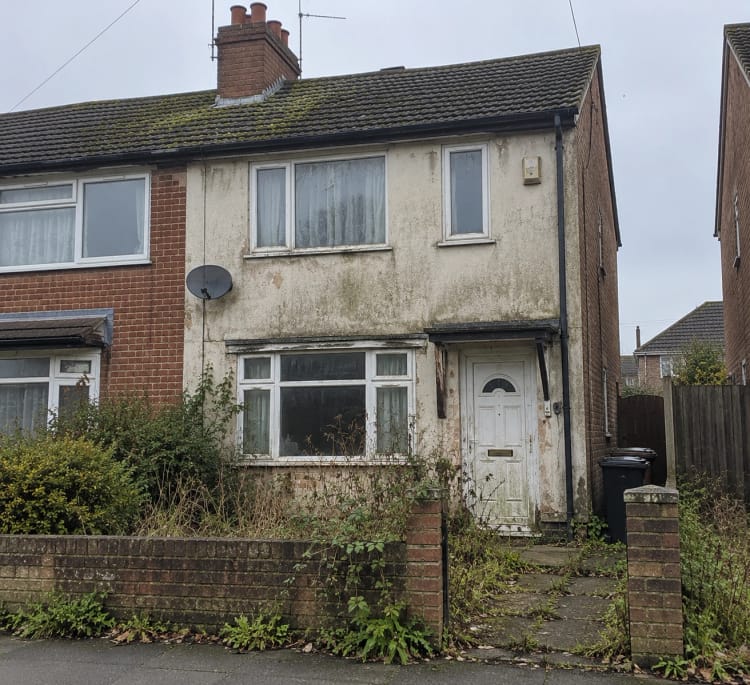
Selling
What to do if you inherit a property you don’t want
Inheriting a property can appear straightforward at first, but in practice it often brings with it far more responsibility than people expect.

Selling
My sibling is delaying the sale of our inherited house. What can I do?
When one beneficiary is living in an inherited property and does not want to sell, it can leave the rest of the family in a difficult position.